
Education symposium with Memoria Press

On Saturday, February 7th 2026, the Tocqueville Network gathered in Heemskerk for an invitation-only education symposium, organised jointly with Memoria Press. The meeting focused on practical ways in which parents and citizens can contribute to improving the academic formation of the next generation. Among those present were education professionals, the Minister of Education, and Member of Parliament Diederik Boomsma (education spokesman for JA21). Scroll down for a report of what was discussed!
Panel 1
The classical ideal of education
In the first panel, three experts discussed classical education and the pursuit of excellence from different perspectives: dr. Brian Lapsa (Memoria Press), dr. Jordi Wiersma (Pascal Institute), and dr. Emma Cohen de Lara (Amsterdam University College).
Central to the discussion was the idea that academic education should aim at the formation of wisdom and virtue through the study of the liberal arts and sciences and the Great Books of the Western tradition. The liberal arts and sciences were traditionally structured around the Trivium (grammar, logic, and rhetoric) and the Quadrivium (arithmetic, geometry, astronomy, and music). This structure was intended not merely to transmit knowledge, but above all to teach students how to think. The emphasis was therefore not primarily on what one thinks, but on how one thinks.
This ideal dates back to the Greek idea that freedom and virtue are inseparably linked. Higher education for free citizens (artes liberales) was not directed towards a profession, but towards personal and moral formation.

An important component of this is the reading of classical texts. Together, these form an intellectual and moral programme that confronts students with fundamental questions concerning justice, courage, and the good life. Because these texts are so rich, understanding them requires repeated reading throughout one’s life—by teachers as well as students.
In the Netherlands, too, the liberal arts long formed the foundation of higher education. Students studied authors such as Boethius, Cicero, and Aristotle, as well as the Bible. Only afterwards did they specialise in a professional field. A law student, for example, first had to demonstrate a broad general education before qualifying as a barrister.
Although this ideal persisted until the 1960s, it had already begun to decline gradually in the nineteenth century. The Education Act of 1876 placed greater emphasis on specialisation, inspired by the German university model of Von Humboldt from the early nineteenth century. While this model still included broad formation, it marked the first separation between the humanities and the natural sciences. As a result, the classical framework gradually disappeared from practice.
Later attempts to restore general education did not endure. In our own time, even the gymnasium has partly lost its classical character. The formation of free, independent, and virtuous citizens has receded across the board. Highly educated individuals are no longer characterised by broad formation and the capacity for independent critical thought, but by adherence to pre-formulated protocols within increasingly narrow specialisations. Conformism, superficiality, and a lack of new insights thus prevail.
Many of these developments can be explained by the democratisation of society. Classical education rests on a hierarchical foundation, which sits uneasily with the egalitarian tendencies inherent in democracy. In the classical view, good education acknowledges that students possess different—and therefore unequal—capacities.
Yet democratic equality does not necessarily have to conflict with this aristocratic insight. Democracy does not have to mean that everyone reaches the same level (equality of outcome); it can also be understood as giving everyone the opportunity to develop at their own level (equality of dignity). Small-scale initiatives may help to do justice to such human differences.
Panel 2
Opportunities for renewal
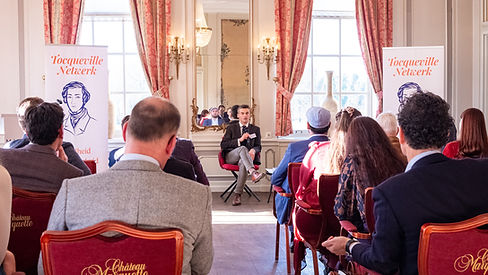
The second panel focused on the practice of educational innovation in the Netherlands and Flanders. Speakers included Bob Wegkamp (teacher and experienced home schooler), Ms Hannah von Wertheimstein (education lawyer), and dr. Kees-Jan Schilt (VU Brussels / Lux Mundi).
A comparison between examinations from 1926 and 2026 shows that educational standards have declined over time. This impression is reinforced by experiences at universities, where first-year students often lack sufficient prior knowledge. As a result, lecturers are compelled to spend much of the first few months of a student’s time at university remedying basic deficiencies, before they can address the actual curriculum.
At the same time, universities appear increasingly focused on ensuring that as many students as possible graduate. Examinations are adapted accordingly, resulting in a decline in knowledge levels, while the number of degrees awarded rises. This development raises questions about the true value of a degree and the quality of education.
The rise of artificial intelligence makes this situation even more urgent.
Students who have not sufficiently learned to reason and write independently risk using AI as a substitute for their own thinking, rather than as a supportive tool. In the long term, this could lead to a society that is heavily dependent on technology and loses its capacity for critical thought.
Within this context, home schooling is sometimes proposed as a possible solution. In the Netherlands, however, home schooling is in principle prohibited, with only a few exceptions, such as religious objections to all local schools, long-term illness, or enrolment in a foreign school.
Nevertheless, home schooling offers interesting perspectives. It is flexible, can be tailored to the child’s needs, and allows for intensive one-to-one instruction. Students can work at their own pace, with the quality of teaching hours outweighing their quantity. Hybrid models, such as those in the United States—where students attend school for two days and receive home schooling for three—may offer an accessible and promising first step.
There are also clear disadvantages, however. Home schooling often requires a household to live on a single income. In addition, it is difficult to offer all subjects at a high level, and parents are limited by their own knowledge and skills. For those wishing to explore alternatives to mainstream education, a cautious approach seems advisable: start small, document everything carefully, and, where necessary, take steps within the administrative system.
It is also notable that, in theory, the law appears to allow more scope for alternative education than is utilised in practice.
Establishing a new type of school should, legally speaking, be relatively straightforward, yet innovative initiatives often encounter resistance from the education inspectorate. As a result, alternative forms of education do not always have the opportunity to develop.
Finally, international developments offer opportunities. For example, the Classical Learning Test (CLT) is accepted by a growing number of American universities as an alternative to traditional admissions tests. In the future, this could also provide opportunities for Dutch students outside the mainstream education system.
Conclusion
Contemporary preparatory and academic education falls short in two respects. On the one hand, classical formation aimed at wisdom, virtue, and independent thought has largely disappeared. On the other hand, educational standards have demonstrably declined compared to the past. It is reasonable to suspect a connection between these developments.
The solution does not primarily lie with government, but with greater freedom: room for new initiatives (such as the Pascal Institute and Lux Mundi), small-scale education, hybrid models that combine existing and new practices, and engaged parents and citizens who take responsibility. The law offers more possibilities than is often assumed, but these must be actively utilised and defended.
